
Beverage Bars — A Thoughtful Approach to Everyday Living

Why Beverage Bars Have Become Popular
We’re seeing a noticeable shift toward entertaining at home.
Clients are spending more time hosting, gathering, and creating routines within their own spaces rather than going out. As a result, rooms are becoming more specialized — designed around how people actually live day to day.
Beverage bars are a natural extension of that shift.
They bring a specific function into one dedicated area, whether that’s morning coffee, evening cocktails, or something in between. When done well, they’re not just practical — they also become a strong visual moment within the home.
This isn’t so much a trend as it is a reflection of how lifestyles are evolving.
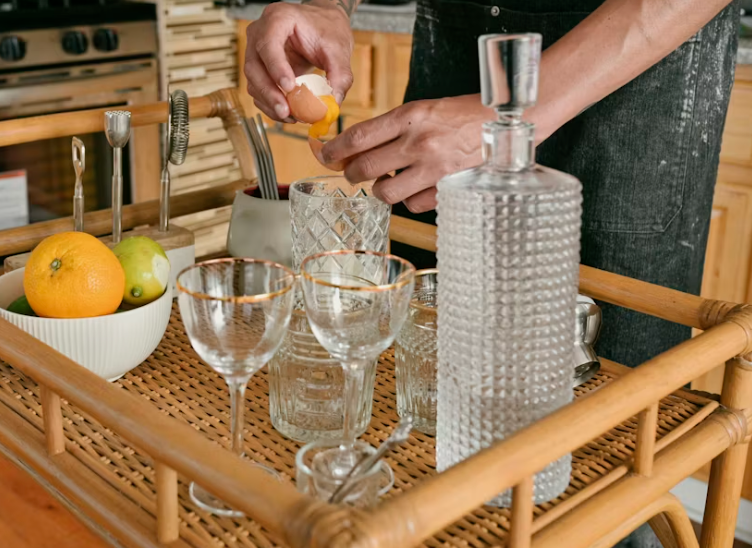
What Is a Beverage Bar?
A beverage bar can take many forms depending on how it’s used.
Some are designed around the morning routine — a place for coffee, tea, and everything that supports a smooth start to the day. Others focus on wine and spirits, acting as a more traditional bar setup for entertaining.
In homes with children, we’re also seeing beverage areas designed specifically for them — often placed in a rec room or secondary space to keep activity out of the kitchen.
The common thread is clarity of purpose. When everything needed for a specific routine is contained in one place, the space becomes easier to use and maintain.
Designing a Beverage Bar That Works
The most successful beverage bars are designed with both function and restraint in mind.
Appliances should feel integrated rather than added on. For example, a panel-ready undercounter refrigerator or ice maker allows the space to read as cabinetry rather than a collection of standalone pieces.
For clients looking for a more accessible option, a compact countertop ice maker can work well, especially when paired with thoughtful storage.
A small bar sink — typically in the 12" to 18" range — makes a noticeable difference in usability. In coffee or tea-focused setups, an InstaHot is often one of the most appreciated additions for daily use.
Material selection is also important. Quartz countertops are a practical choice, especially in areas where coffee, tea, or wine are used frequently, as they help prevent staining and are easy to maintain.
Lighting and electrical planning are often overlooked but critical. Under-cabinet lighting not only elevates the look of the space but also provides necessary task lighting. Ensuring there are enough outlets for appliances — coffee makers, kettles, blenders, or frothers — prevents the space from becoming frustrating to use.
Finally, storage should be considered early. Hidden storage helps reduce visual clutter and keeps the space feeling intentional rather than overfilled.
Display as Part of the Design
Beverage bars also create an opportunity to introduce display in a more intentional way.
Rather than treating shelving as purely decorative, we look at it as part of the overall composition. Open shelving with wood, metal, or glass elements can add lightness and contrast, particularly when paired with more grounded materials like wood or stone. When done well, it allows the space to feel layered without becoming over-styled.
In wine-focused areas, display can take on a more architectural role. Wall-mounted systems that present bottles individually — almost as a series of objects rather than storage — can read more like art than utility. These approaches work especially well when they’re integrated into the surrounding millwork, so they feel like part of the design rather than an add-on.
As with most elements in a beverage bar, restraint is key. A few well-considered pieces tend to create a stronger visual impact than a fully styled shelf.
A Lifestyle-Driven Addition
At its best, a beverage bar is not about adding something extra to a home — it’s about refining how the space supports everyday life.
Whether it’s making a morning routine easier, creating a place to gather in the evening, or simply keeping certain functions organized, these spaces bring clarity and intention to the home.
Like much of residential design today, the value isn’t just in how it looks, but in how it works.


Comments